en

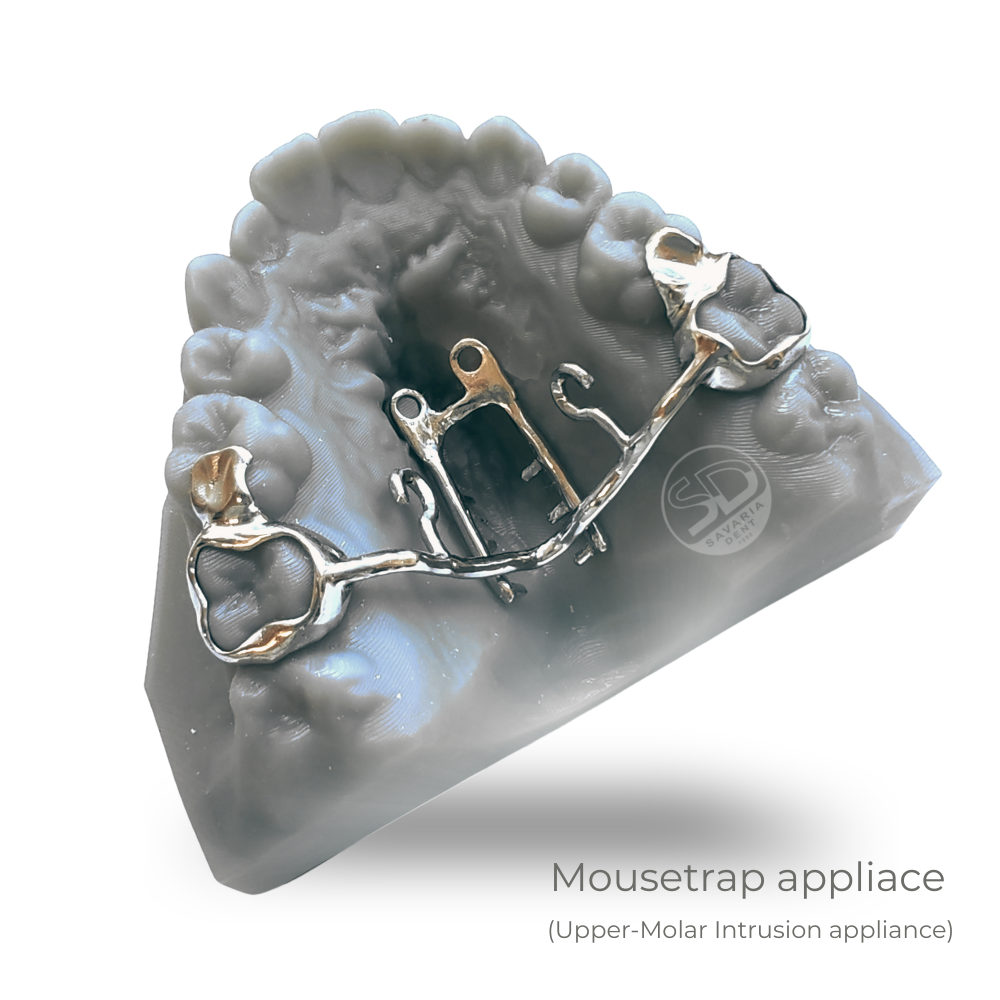
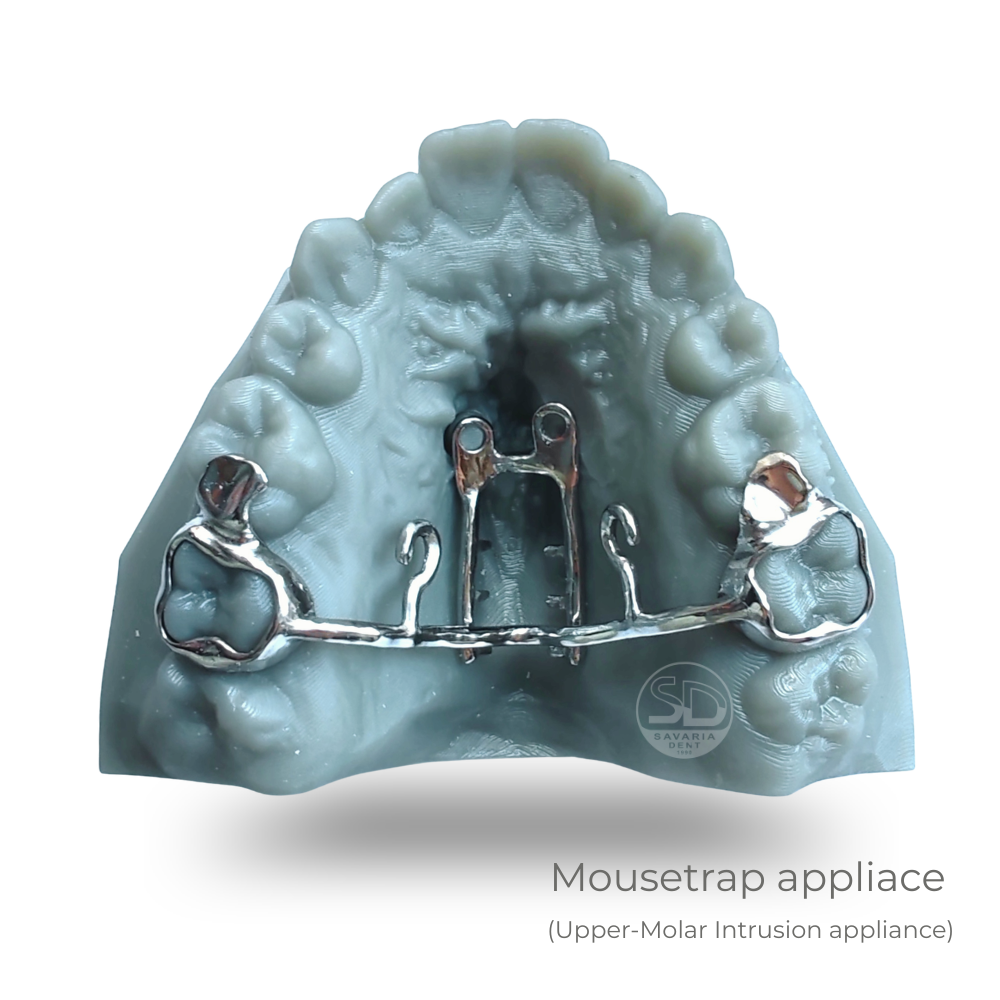
Mousetrap
A palatal, mini-implant-anchored, cantilever-type upper molar intrusion appliance
db
Quotation
Description
Specification
Mouse Trap: a palatal, mini-implant-anchored, cantilever-type upper molar intrusion appliance
The Mouse Trap is a bone-anchored (TAD) intrusion appliance, typically with two mini-implants in the anterior palate, and possibly a third behind the palatal fold (T-zone). A plate (Beneplate) is attached to this, from which one or two arms extend into the molar region. The appliance was described by Wilmes et al. (University of Düsseldorf) in the JCO in 2013.
Principle of operation:
- In the passive state, the distal end of the arm is positioned cranially above the molar center of resistance (CR).
- When the arm is pulled down and attached to the molar (via a steel ligature or a hook soldered to the TPA), a constant intrusional force is generated.
- If the arm acts only palatally, torque is generated. This is neutralized by a passive transpalatal arch (TPA), which prevents palatal tilting of the molar.
- If the line of force passes through the CR, the movement is body-side intrusion. By shifting the line of force mesially or distally, intrusion can be combined with uprighting.
- The force can be measured with a force gauge.
Main indications:
- Overgrown upper molars due to a missing antagonist, to create space for prosthetics. In the case reports, approximately 2–3 mm of intrusion was achieved over 5–6 months.
- Open bite correction through molar intrusion and mandibular autorotation, as an alternative to surgical maxillary impaction.
Advantages according to the authors:
- measurable, constant, easily adjustable force
- minimal invasiveness
- no risk of root damage or sinus perforation
- low risk of failure or fracture due to the good bone quality of the anterior palate
A few available publications:
- Mini implant screw: JeilMedical - Dual-Top
- Type: Vertical appliances